
In This Guide
- Why Email Still Works for Local Businesses
- The Welcome Sequence: First Impressions That Convert
- The Follow-Up Sequence: Nurturing Leads Who Did Not Book
- The Reactivation Sequence: Bringing Past Customers Back
- AI-Generated Email Content: Scale Without Sacrificing Quality
- Measuring Results: The Metrics That Matter
Most local business owners have written off email marketing. They think of it as something e-commerce brands do, not something relevant to a plumbing company, a dental practice, or a landscaping service. They are wrong, and the numbers prove it.
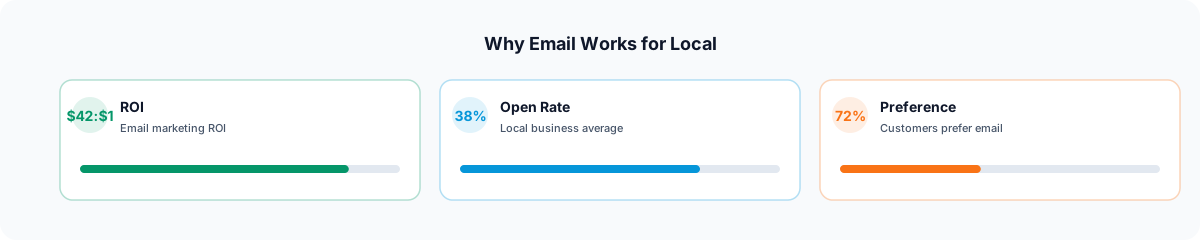
Email marketing generates an average return of $36 for every $1 spent, making it the highest-ROI marketing channel in existence. For local businesses specifically, email is the most effective tool for two things that social media and paid ads cannot do well: nurturing leads who are not ready to buy today, and reactivating past customers who have not thought about you in months.
The catch is that email marketing only works when it is automated. Nobody has time to write individual emails to hundreds of customers. Drip campaigns, pre-written email sequences that trigger automatically based on customer behavior, solve this problem completely. Set them up once, and they run forever.
Why Email Still Works for Local Businesses
Social media algorithms decide who sees your content. Google Ads charge you for every click. But when you send an email, it goes directly to the customer's inbox. No algorithm. No pay-per-view. You own the relationship, and that relationship compounds over time as your list grows.
Local businesses have a natural advantage with email because their customers are real people with real relationships, not anonymous internet shoppers. When Sarah receives an email from the HVAC company that installed her furnace last year saying "Hey Sarah, it has been 12 months since your furnace installation, time for your annual maintenance check," that email gets opened. It feels helpful, not spammy, because it is relevant and timely.
The data backs this up. Local service businesses consistently see email open rates of 25 to 40%, well above the 15 to 20% average for e-commerce. Click-through rates run 3 to 6%, compared to the 2% average across industries. Local customers open emails from businesses they have actually used because the content is relevant to their life, not just another promotion they did not ask for.
The Welcome Sequence: First Impressions That Convert
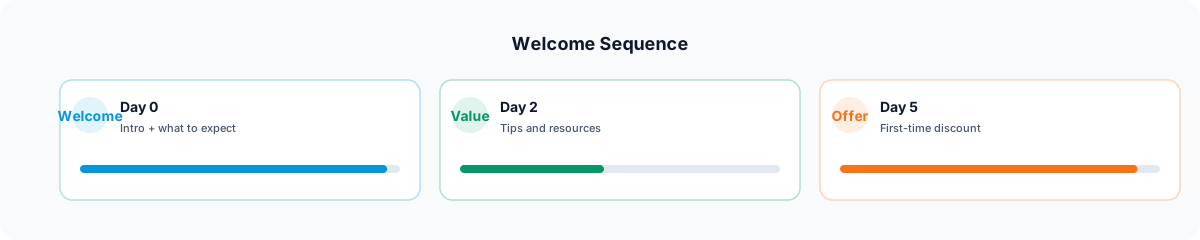
The welcome sequence triggers when a new customer completes their first service or when a lead submits a contact form. It is the most important sequence you will build because first impressions set the tone for the entire customer relationship.
A strong welcome sequence for a local business has three to four emails spread over two weeks.
Email 1 (Immediately after service)
Thank the customer for choosing your business. Recap what was done. Include your direct phone number for any questions. Ask for a Google review with a one-tap link.
Email 2 (3 days later)
Share a helpful tip related to the service they received. For example, after an AC tune-up: "3 things you can do to keep your energy bill low this summer." This positions you as an expert who cares about their long-term success, not just the sale.
Email 3 (7 days later)
Introduce your other services. Most local businesses offer multiple services, but customers only know about the one they hired you for. This email broadens the relationship.
Email 4 (14 days later)
Ask for a referral. "Know someone who needs [service]? We would love to take care of them." Include a referral incentive if you offer one.
This sequence runs automatically for every new customer. You write it once. It runs for years. Every customer gets the same great onboarding experience regardless of how busy your week is.
The Follow-Up Sequence: Nurturing Leads Who Did Not Book
Not every lead converts on the first contact. Someone requests a quote for a bathroom remodel, you send the estimate, and then silence. They are comparing prices, thinking it over, or just got distracted. Without follow-up, 80% of these leads die on the vine.
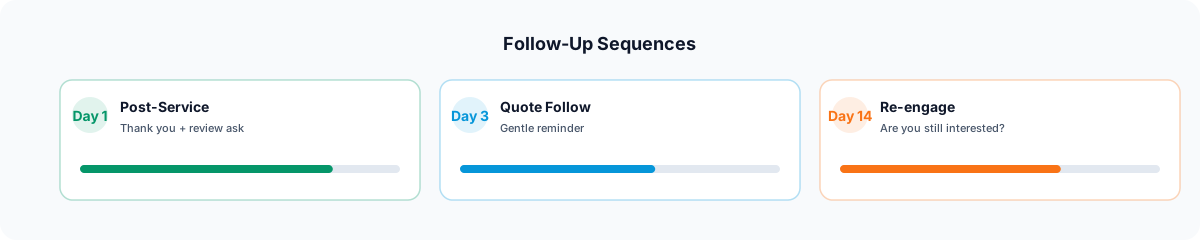
A follow-up drip campaign keeps you top of mind without being pushy. The sequence is typically five emails over 30 days.
The first email (day 2) checks in casually: "Just wanted to make sure you received the estimate and see if you had any questions." The second (day 5) shares a relevant case study or before-and-after photo. The third (day 10) addresses common objections like pricing concerns or project timeline worries. The fourth (day 20) offers a limited-time incentive such as free consultation or waived assessment fee. The fifth (day 30) is the "last chance" email that creates gentle urgency.
Businesses running this sequence consistently convert 10 to 15% of leads that would have been lost. For a contractor sending 50 quotes per month, that is 5 to 8 additional jobs, often worth thousands each. The sequence costs nothing to run once it is built.
The Reactivation Sequence: Bringing Past Customers Back
Your existing customer list is the most valuable marketing asset you own. These are people who already trust you, already paid you, and are statistically five to seven times more likely to buy from you again than a new prospect. Yet most local businesses do nothing to re-engage past customers.
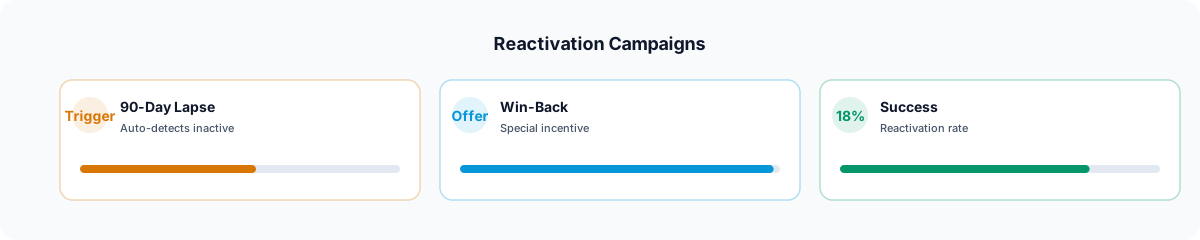
Reactivation campaigns target customers who have not booked a service in 6, 12, or 18 months. The messaging is simple and service-specific: "Hi Mike, it has been a year since we cleaned your carpets. Most homes benefit from annual deep cleaning to maintain their carpet warranty. Would you like to schedule your next appointment?" Include a one-click booking link and a seasonal incentive if appropriate.
The results from reactivation campaigns are consistently impressive. A three-email reactivation sequence sent to customers dormant for 6+ months typically reactivates 8 to 12% of the list. For a business with 500 past customers, that is 40 to 60 reactivated bookings from a single campaign that took 30 minutes to set up. These are among the highest-margin jobs you will book because the acquisition cost is near zero.
AI-Generated Email Content: Scale Without Sacrificing Quality
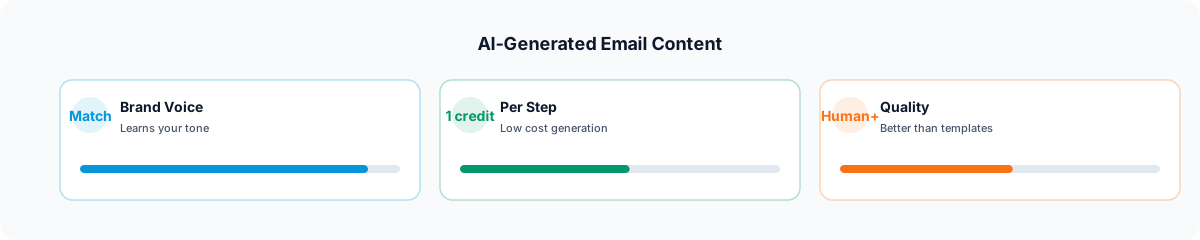
The biggest barrier to email marketing for local businesses has always been the writing. Composing effective, professional emails takes time and skill that most business owners do not have or do not want to spend. AI eliminates this barrier entirely.
Modern AI tools generate email sequences in minutes. You provide the basics: your business name, the services you offer, your brand voice (professional, friendly, casual), and the goal of the sequence. The AI produces a complete series of emails with subject lines, body copy, and calls to action, all customized to your industry and customer base.
More importantly, AI can personalize emails at scale. Instead of sending the same generic newsletter to your entire list, the system generates different versions based on the customer's service history, location, and last interaction date. The plumbing customer gets content about plumbing. The HVAC customer gets content about HVAC. This segmentation drives 2 to 3x higher engagement than one-size-fits-all emails. Platforms like Elmob.ai's CRM handle this segmentation automatically based on your customer data.
Measuring Results: The Metrics That Matter
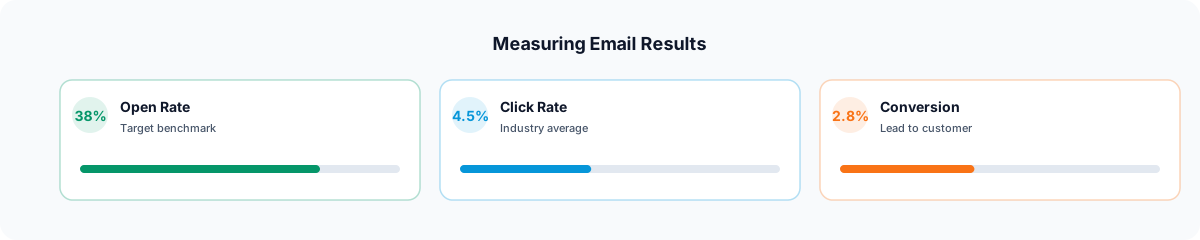
Email marketing gives you clear, measurable data on what is working and what is not. Here are the metrics local businesses should track.
Open Rate
Target: 25-40% for local businesses. If yours is below 20%, your subject lines need work or your list needs cleaning.
Click-Through Rate
Target: 3-6%. This measures how many readers take action. Low CTR usually means the content is not compelling enough or the CTA is buried.
Conversion Rate
Target: 1-3%. The percentage of recipients who actually book, call, or purchase. This is the number that directly ties to revenue.
Revenue Per Email
The ultimate metric. Track how much revenue each email campaign generates. Most local businesses see $0.50 to $2.00 per email sent in their reactivation campaigns.
The beauty of email marketing is that every campaign produces data that makes the next one better. Low open rate? Test different subject lines. Low click rate? Improve your call to action. Low conversions? Adjust your offer. Over time, your sequences become finely tuned revenue machines that run without intervention.
Email marketing is not glamorous. It does not have the immediate dopamine hit of a viral social post or a Google Ads dashboard showing clicks in real time. But for local businesses that care about long-term, sustainable growth, there is no channel that delivers more consistently. Set up your three core sequences: welcome, follow-up, and reactivation. Let AI write the content. Let automation handle the delivery. And watch the bookings come in from customers who already know and trust your business.
Ready to see what email automation can do for your revenue? Check our pricing plans to find the right fit for your business, or get started with a free growth plan.