
Guide 15 min read

The Complete Home Services Marketing Guide for 2026

Everything HVAC, plumbing, roofing, electrical, landscaping, and pest control contractors need to know about lead generation, local SEO, Google Ads, and AI-powered marketing.

| Updated March 6, 2026

The Home Services Marketing Landscape in 2026

Home services industry overview showing HVAC, plumbing, and roofing icons

The way homeowners find and hire contractors has fundamentally shifted. In 2026, your marketing playbook from even two years ago is already outdated. Understanding where the industry stands right now is the first step to building a system that consistently fills your pipeline.

Local Search Dominates Everything

46% of all Google searches now carry local intent. When someone types "AC repair near me" or "best plumber in [city]," they are ready to buy. These are not research queries. These are people with a broken pipe, a dead furnace, or a leaking roof. They want someone now.

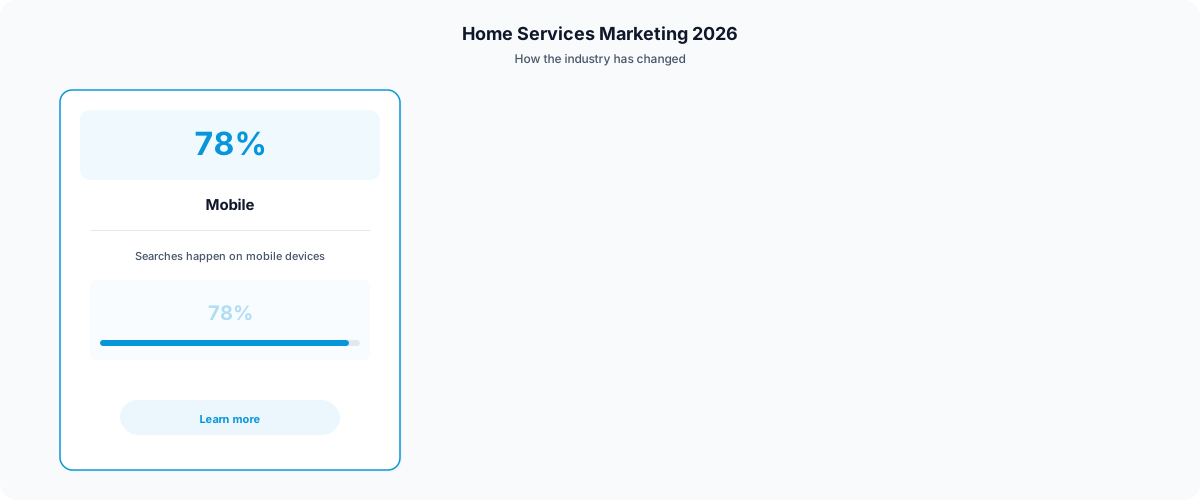
Here is the stat that should change how you think about marketing: 76% of people who search for a local service on their phone visit a business within 24 hours. That means three out of four local searches convert into real-world action within a single day. If your business is not showing up in those results, you are invisible to the majority of your potential customers.

AI Is Changing How Homeowners Find Services

Google is no longer the only search engine that matters. Homeowners are increasingly using AI-powered search tools to find and vet contractors. ChatGPT, Google AI Overviews, and Perplexity are all surfacing contractor recommendations directly in their responses, often before the user ever clicks a traditional search result.

This means your online presence needs to be optimized not just for Google's algorithm, but for AI systems that pull information from reviews, business directories, your website content, and structured data. Contractors who ignore Generative Engine Optimization (GEO) will watch their visibility erode as AI search grows.

The bottom line: the home services marketing landscape in 2026 rewards businesses that are visible everywhere, respond instantly, and have a reputation that AI systems can verify. The contractors who build these systems now will dominate their markets for years.

Lead Costs by Industry

Bar chart comparing lead costs across home service industries

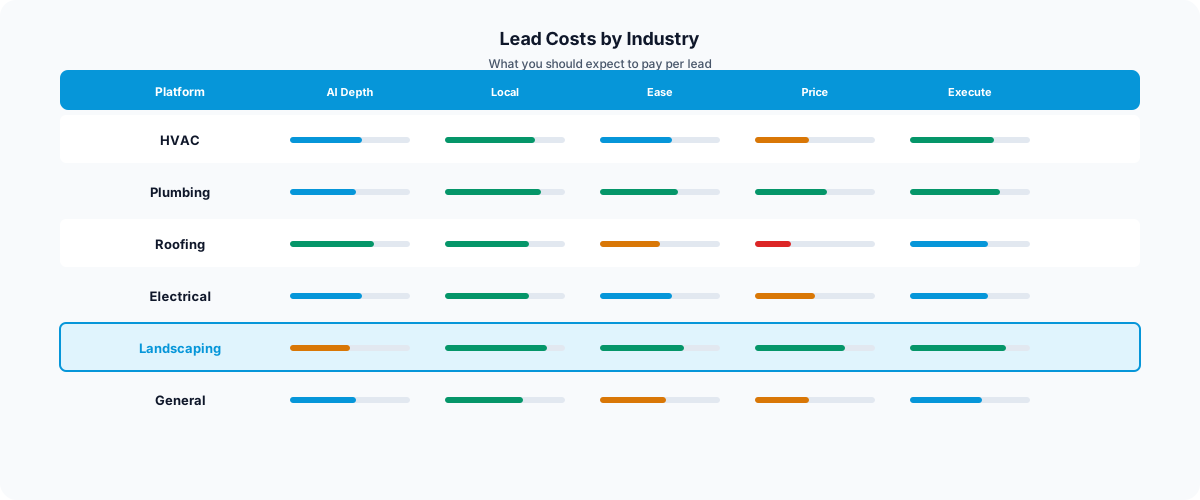
Before you spend a dollar on marketing, you need to understand what leads actually cost in your industry and what margins you are working with. These numbers determine your entire marketing budget and which channels make sense for your business.

Roofing: High-Ticket, High-Cost

Roofing is the most expensive home service vertical for lead generation. Expect to pay $350 to $500 per qualified lead through paid channels. However, the economics still work because average job values range from $8,000 to $25,000+ with 35-40% profit margins. A single closed roofing job can pay for an entire month of marketing spend. The key is making sure your close rate justifies the investment. If you are closing less than 25% of qualified leads, fix your sales process before scaling ad spend.

HVAC and Electrical: The Sweet Spot

HVAC and electrical leads typically cost $100 to $250 per lead depending on the service type. Emergency repair leads cost more but convert faster. Installation leads (new AC units, panel upgrades) cost less but require longer sales cycles. These verticals benefit from seasonality: HVAC companies can front-load their ad spend during peak heating and cooling months to maximize return.

Plumbing and Pest Control: Volume Plays

Plumbing and pest control operate on tighter margins with lower average job values. The upside is higher conversion rates: 12-15% of leads typically convert to booked jobs. These verticals win through volume. The contractors who dominate are the ones who can process and respond to the most leads in the shortest time.

What Agencies Charge

Traditional marketing agencies servicing home services businesses charge $5,000 to $10,000 per month in management fees, plus your ad spend on top of that. For a roofing company spending $5,000/month on ads, the all-in cost including agency fees can easily exceed $10,000 to $15,000/month. That is a significant investment that demands clear ROI tracking.

Understanding these numbers is critical. If you are paying $250 per lead and closing 20% of them, your cost per acquired customer is $1,250. If your average job is $5,000 with 30% margins ($1,500 profit), you are barely breaking even on the first job. Your real profit comes from repeat business, referrals, and lifetime customer value.

Google Business Profile: Your #1 Lead Source

Google Business Profile listing for an HVAC company with 5-star reviews

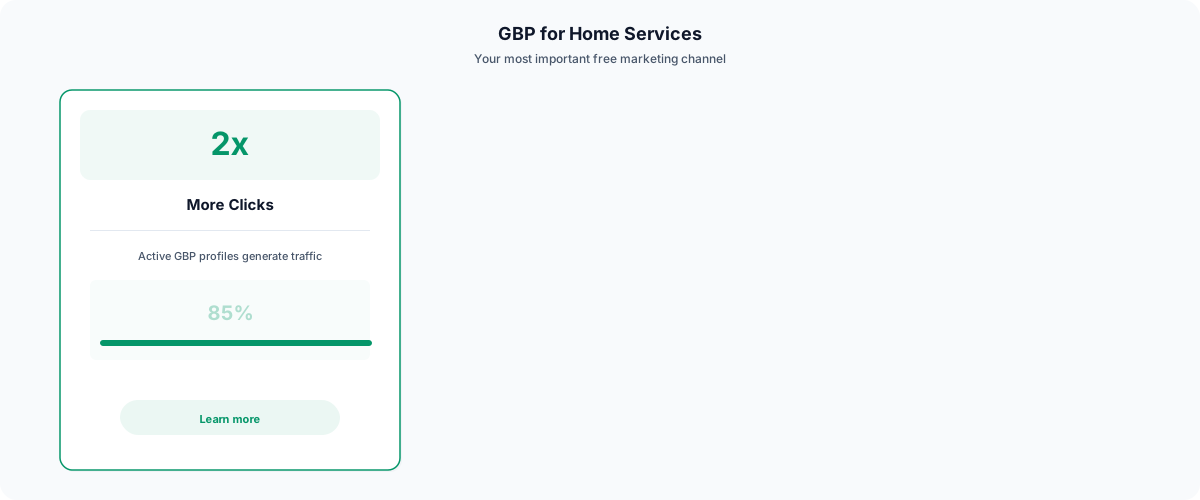
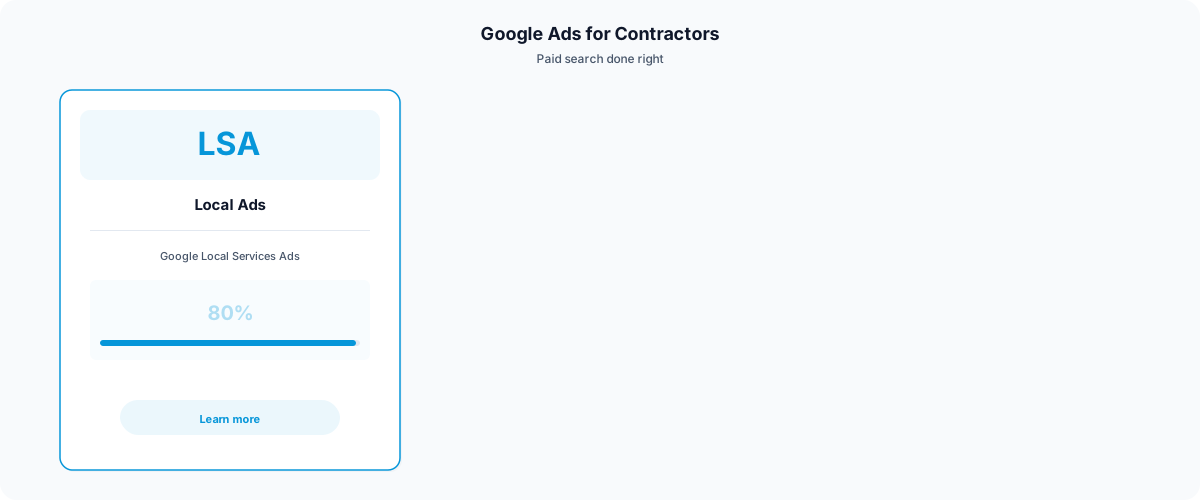
If you could only do one thing for your marketing, it should be optimizing your Google Business Profile. For most home services businesses, GBP drives more leads than your website, social media, and paid ads combined. It is the first thing homeowners see when they search for your services, and it is completely free.

Why GBP Matters More Than Your Website

When someone searches "plumber near me," Google shows the Map Pack (the top 3 local results) before any organic website results. These Map Pack results get 42% of all clicks on the page. Your beautifully designed website sitting in position 4 or 5 of organic results gets a fraction of that traffic. GBP is where the action is.

Additionally, AI search engines like ChatGPT and Perplexity pull heavily from GBP data, reviews, and business information when recommending contractors. An optimized GBP feeds both traditional search and AI search simultaneously.

How to Optimize Your GBP

  • Primary and secondary categories: Choose your most specific primary category (e.g., "HVAC contractor" not "contractor"). Add every relevant secondary category available.
  • Services with descriptions: List every service you offer with detailed descriptions. Include pricing ranges where possible. Google uses this data for matching searches to your profile.
  • Photos: Upload at least 30 high-quality photos. Include team photos, completed projects, vehicles, equipment, and your office. Profiles with 30+ photos get 35% more clicks than those with fewer than 10.
  • Google Posts: Post at least 3 times per week. Share completed projects, seasonal tips, promotions, and community involvement. Posts keep your profile fresh and signal to Google that your business is active.
  • Q&A section: Pre-populate your Q&A with the 15-20 most common questions customers ask. Answer them thoroughly. This content appears prominently on your profile and helps AI engines understand your services.
  • Reviews: Aim for 10+ new reviews per month. Review velocity (how many reviews you get per month) matters more than total review count. A business with 50 reviews getting 10 new ones monthly will outrank a business with 200 reviews getting 2 per month.

The contractors who treat GBP as a living, breathing marketing channel rather than a set-it-and-forget-it listing are the ones who dominate local search. It requires consistent effort, but the payoff is the highest-quality, lowest-cost leads in your entire marketing mix.

Local SEO for Home Services

Google Maps showing local service business rankings in a neighborhood

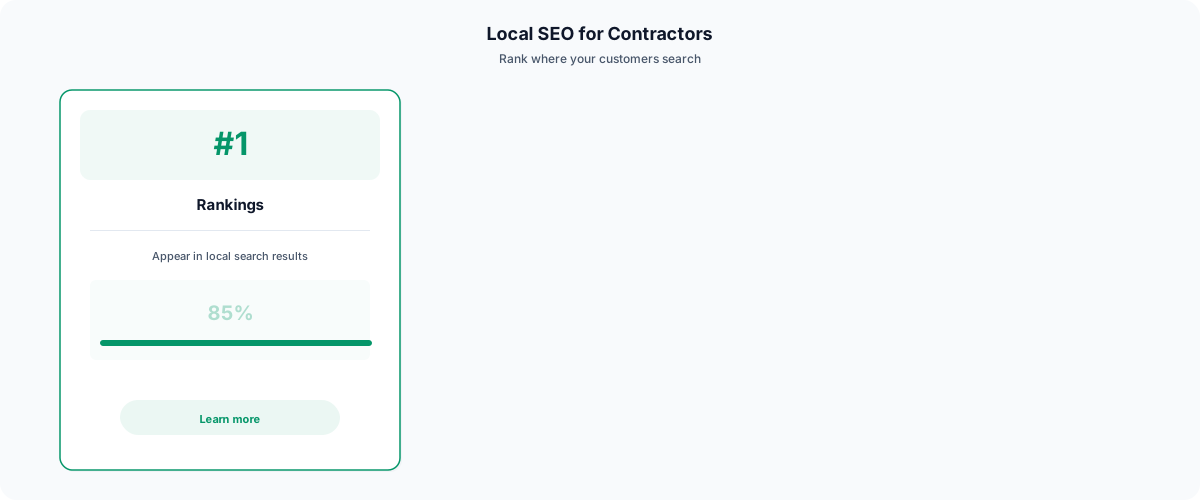
Local SEO is the long game that pays compound dividends. While Google Ads stop producing leads the moment you stop paying, a well-built local SEO strategy generates organic leads for months and years. Here is how to build it right.

The Neighborhood Pages Strategy

This is the single most effective local SEO tactic for home services businesses: create a dedicated landing page for every ZIP code, neighborhood, and city you serve. If you serve 30 neighborhoods, you should have 30 unique pages on your website.

Each page should include the neighborhood name in the title, H1, and throughout the content. Reference local landmarks, common home types in that area, and specific problems homeowners face. A page targeting "HVAC Repair in Summerlin, NV" should mention the desert climate, common AC issues in newer tract homes, and your response time to that specific area.

This strategy works because it matches the exact way homeowners search. They do not search "HVAC repair Las Vegas." They search "AC repair Summerlin" or "furnace repair Henderson NV." By creating pages that match these hyper-local queries, you capture traffic that your competitors with generic service pages will never see.

Schema Markup for Local Businesses

Schema markup is structured data you add to your website that tells Google (and AI search engines) exactly what your business does, where you operate, and what services you offer. For home services businesses, implement LocalBusiness schema, Service schema, and Review schema. This helps search engines display rich results with star ratings, service areas, and pricing directly in search results.

Citation Building

Your business information (name, address, phone number) needs to be consistent across 60+ online directories. This includes Yelp, Angi, HomeAdvisor, BBB, Nextdoor, Facebook, Apple Maps, Bing Places, and dozens of industry-specific directories. Inconsistent information confuses search engines and hurts your rankings. Use a citation management tool or service to audit and correct your listings across all major directories.

GEO: Generative Engine Optimization

GEO is the new frontier of local SEO. It is about optimizing your content so that AI search engines (ChatGPT, Perplexity, Google AI Overviews) recommend your business when homeowners ask questions like "Who is the best roofer in [city]?" AI systems pull from reviews, directory listings, website content, and structured data. The businesses that appear in AI-generated answers are the ones with the most consistent, comprehensive, and authoritative online presence. If you are not thinking about GEO yet, your competitors soon will be.

Speed-to-Lead: The 5-Minute Rule

Stopwatch showing 5-minute response time with a phone notification

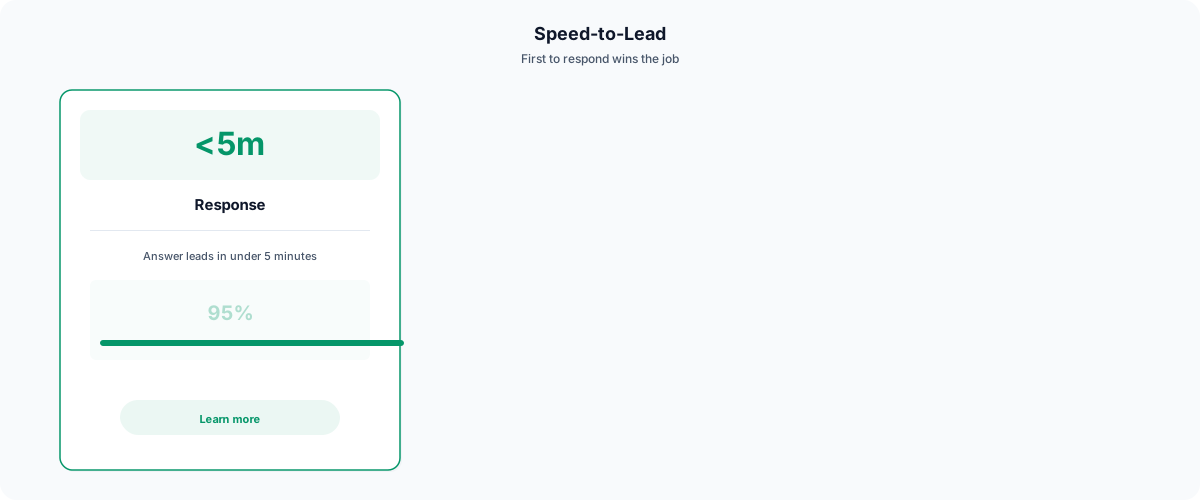
This is the single most impactful thing you can do to increase your revenue without spending another dollar on marketing. Respond to every lead within 5 minutes.

The data is overwhelming: responding to a lead within 5 minutes makes you 21 times more likely to qualify that lead compared to responding after 30 minutes. After 5 minutes, the odds of qualifying a lead drop by 400%. After an hour, most leads have already called your competitor.

Think about this from the homeowner's perspective. They have water flooding their basement. They Google "emergency plumber near me." They fill out a form or call two or three companies. The first company that answers, confirms they can help, and offers a time window gets the job. The other two companies call back 45 minutes later to a homeowner who already has someone on the way.

Voice AI for Missed Calls

The average home services business misses 30-40% of inbound calls. Every missed call is a lost lead that you already paid for through your marketing efforts. Voice AI solves this by answering every call, gathering the caller's information, qualifying the lead, and either scheduling directly or alerting your team for immediate follow-up. This is not a voicemail system. It is an AI agent that has a natural conversation with the caller and captures the information you need.

SMS Auto-Response Sequences

Every web form submission and missed call should trigger an instant SMS to the lead. Something like: "Hi [name], thanks for reaching out to [company]. We got your request for [service] and a team member will call you within the next few minutes. Reply STOP to opt out." This simple message confirms you received their inquiry and sets the expectation for a callback. It also opens a text conversation that your team can use for scheduling and follow-up.

How Elmob.ai Automates Speed-to-Lead

Elmob.ai's platform combines Voice AI, SMS automation, and CRM workflows to ensure no lead goes uncontacted. When a lead comes in from any source (Google Ads, GBP, your website, social media), the system instantly sends an SMS, triggers a Voice AI callback if no one answers, and creates a task for your team with a countdown timer. The result: our clients achieve an average response time under 2 minutes, which directly translates to higher close rates and lower cost per acquisition.

Review Management

Happy homeowner leaving a 5-star review for a plumber on their phone

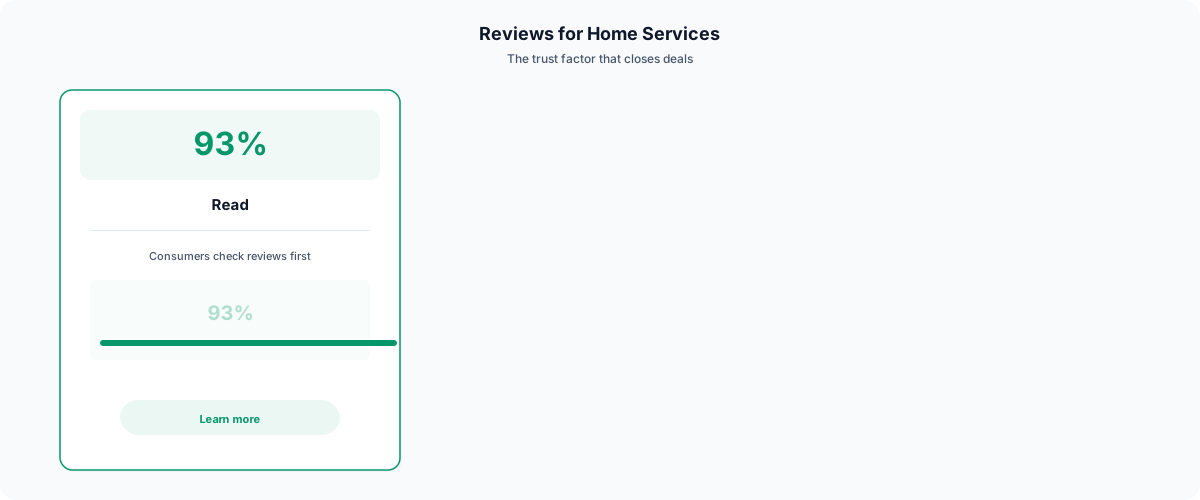
Reviews are the currency of trust in home services. 88% of consumers trust online reviews as much as personal recommendations. But most contractors treat reviews as something that happens passively. The businesses that dominate their markets treat review generation as an active, systematic process powered by AI review management.

Review Velocity Matters More Than Total Count

Google's algorithm weights recent reviews more heavily than old ones. A company with 100 reviews that gets 2 new reviews per month will be outranked by a company with 60 reviews that gets 12 new reviews per month. Review velocity signals to Google that your business is active, growing, and consistently delivering quality work.

Your target should be 10+ new reviews per month at minimum. For larger operations completing 100+ jobs per month, aim for a 15-20% review conversion rate, meaning 15-20 reviews for every 100 completed jobs.

Automated Review Request Sequences

The most effective review generation systems send automated requests via SMS and email within 2 hours of job completion. The sequence should include an initial request, a follow-up 24 hours later if no review was left, and a final gentle reminder 3 days later. Each message should include a direct link to your Google review page. Making it easy is the key. Every extra click or step you add reduces your review conversion rate by 20-30%.

AI-Powered Review Response

Responding to every review (positive and negative) is critical for both SEO and customer perception. AI tools can now draft personalized, professional responses to reviews within minutes of them being posted. The best systems customize responses based on the review content, mention specific services performed, and thank the reviewer by name. For negative reviews, AI assists with drafting empathetic, solution-oriented responses while flagging the review for management attention.

Content and UGC

Before and after photos of a home renovation project used for marketing

Content marketing for home services is not about writing blog posts nobody reads. It is about creating visual, authentic content that builds trust and drives conversions. Here are the content types that actually move the needle.

Before/After Project Photos

Before-and-after photos are the most powerful content you can create. A side-by-side image of a destroyed roof next to a finished installation, a clogged drain next to a clean pipe, or a dead lawn next to a lush green yard tells the story better than any ad copy ever could. Every job your team completes is a content opportunity. Train your crews to take photos before they start and after they finish. Upload these to your GBP, website, and social media consistently.

Video Testimonials

A 30-second video of a happy homeowner standing next to your team's work is worth more than 100 written reviews. Video testimonials build trust faster than any other content format. You do not need professional equipment. A smartphone video shot at the job site with good lighting is perfectly effective. Ask the homeowner one simple question: "Would you recommend us to your neighbors?" Their genuine answer becomes your best marketing asset.

UGC Video for Social Ads

User-generated content (UGC) style videos are outperforming polished commercials on Facebook and Instagram by 2-3x in click-through rates. These are casual, authentic videos that feel like a friend telling you about a service rather than a company selling you something. Combine UGC testimonials with before/after footage for social ad creatives that convert. This content performs especially well for home services because homeowners want to see real work from real people.

AI-Generated Neighborhood Content

Scaling content for 30, 50, or 100+ service areas used to require a team of writers. AI content tools can now generate unique, localized content for each neighborhood page on your website, each GBP post, and each social media update. The key is human review. AI generates the draft; a human who knows your market edits it for accuracy, adds local details, and ensures it represents your brand voice. This hybrid approach lets you produce 10x the content at a fraction of the cost.
CRM and Lead Nurturing

CRM pipeline showing contractor leads moving through sales stages

Here is the hard truth: most contractors lose 60% of their leads. Not because the leads are bad, but because they lack a system to follow up consistently. A homeowner who requests a quote for a new AC system might not be ready to buy today. But in 3 weeks, when the summer heat hits, they will buy from whoever stayed in touch.

The 5-Touch Follow-Up Sequence

Research shows that 80% of sales require at least 5 follow-up touches, yet 44% of contractors give up after just one attempt. A proper follow-up sequence looks like this:

  • Touch 1 (Immediate): SMS and email confirmation with your company info, plus a phone call within 5 minutes.
  • Touch 2 (Day 1): Follow-up text checking in. "Hi [name], just following up on your request for [service]. Do you have any questions we can answer?"
  • Touch 3 (Day 3): Email with a helpful resource (maintenance tips, cost guide, or project photos relevant to their request).
  • Touch 4 (Day 7): Phone call or voicemail. Personal touch matters at this stage.
  • Touch 5 (Day 14): Final follow-up with a limited-time offer or seasonal promotion.

Email + SMS Nurture Automation

The follow-up sequence above should run automatically through your CRM. No technician or office manager should have to remember to send these messages manually. Modern CRM platforms let you build automated workflows that trigger based on lead source, service type, and engagement behavior.

Beyond the initial follow-up, build long-term nurture campaigns for leads who do not convert immediately. Monthly emails with seasonal maintenance tips, quarterly check-in texts, and annual service reminders keep your brand top of mind. When that homeowner finally needs a new water heater or a furnace replacement, you are the first company they think of because you have been providing value consistently.

Your CRM should also track lifetime customer value. A customer who used you for a $200 drain cleaning might need a $10,000 sewer line replacement next year. The contractors who nurture these relationships through their CRM extract 3-5x more lifetime value from every customer than those who treat each job as a one-time transaction.

Choosing the Right Marketing Partner

Business owner shaking hands with a marketing partner in an office

You have four realistic options for managing your marketing in 2026. Each has tradeoffs. The right choice depends on your budget, team size, and how much time you want to spend on marketing versus running your business.

Option 1: DIY with GoHighLevel ($97/month)

GoHighLevel gives you a CRM, landing page builder, SMS automation, and basic marketing tools for $97/month. It is the most affordable option and gives you full control. The downside: you need to build everything yourself. Funnels, automations, ad campaigns, GBP management, review systems. For an owner-operator who also needs to run their crews, find time for estimates, and manage payroll, the "DIY" approach often means nothing actually gets done consistently. GoHighLevel is a powerful tool, but a tool without someone operating it daily is just software you pay for.

Option 2: Pure AI Platform like JEENIE ($699/month)

Pure AI marketing platforms promise to automate everything: ads, SEO, content, social media, reviews. At $699/month, they offer more than DIY at a fraction of agency costs. The problem is that AI without human oversight produces generic content, misses local market nuances, and cannot build real relationships with your customers or community. AI is incredible at execution and scale, but it still needs human strategy, quality control, and market knowledge to deliver results that actually grow a local business.

Option 3: Traditional Marketing Agency ($5,000+/month)

Traditional agencies provide dedicated account managers, campaign strategists, content creators, and ad specialists. The experience and human touch are real. But at $5,000 to $10,000+ per month (before ad spend), they are priced for businesses already generating $500K+ in annual revenue. You are also often competing for attention with their other clients. The junior account manager handling your campaigns might be juggling 15 other accounts, which means your business gets cookie-cutter strategies rather than the custom attention you are paying premium prices for.

Option 4: AI + Human Hybrid (Elmob.ai, from $0/month)

This is where the industry is heading. AI handles the execution at scale (content generation, ad optimization, review responses, data analysis, automated follow-up), while human strategists handle the thinking (market positioning, campaign strategy, quality control, client communication). You get the speed and consistency of AI with the judgment and creativity of experienced marketers.

At Elmob.ai, this means you get AI-powered ad management, automated lead follow-up, Voice AI for missed calls, GBP optimization, review automation, and CRM workflows, all guided by a dedicated marketing strategist who understands your market. The result is agency-level strategy at a fraction of agency cost, with better consistency because the AI systems never take a day off.

Feature DIY
$97/mo
Pure AI
$699/mo
Agency
$5,000+/mo
Elmob.ai
from $0/mo
Google Ads Management You do it AI only Human managed AI + Human
GBP Optimization You do it Automated Included AI + Human
Speed-to-Lead Automation Manual setup Basic Rarely included Voice AI + SMS
Review Management Manual Automated Included AI + Human QC
Content Creation You do it AI generated Human created AI + Human edited
Dedicated Strategist No No Yes Yes
CRM + Nurture Sequences Manual setup Basic Custom built AI-powered
Time Required From You 10+ hrs/week 2-3 hrs/week 1 hr/week 1 hr/week

The right choice depends on where you are in your business. If you are a solo operator doing $100K/year, GoHighLevel might be the right starting point. If you are doing $500K+ and want to scale without hiring a full marketing team, the AI + Human hybrid model delivers the best ROI per dollar spent. If you are doing $1M+ and want a full creative team, a traditional agency makes sense, but even then, you will want AI-powered speed-to-lead and review automation layered in.

Ready to Build a Marketing System That Actually Works?

Stop guessing. Stop overpaying for agencies that delegate your account to junior staff. Stop relying on tools that automate without strategy.

Elmob.ai combines AI-powered automation with experienced marketing strategists to deliver more leads, faster response times, and higher close rates for home services businesses.

Get Your Free Marketing Assessment

No contracts. No setup fees. See results in 30 days or walk away.

Elmob Assistant
Online
Hey! Are you an agency or a local business?
Want us to reach out?
Drop your info and we'll follow up personally.