
In This Guide
- Why Local Businesses Need Marketing Automation Now
- What to Automate: The 6 Highest-Impact Channels
- The ROI of Marketing Automation for Local Businesses
- Manual Marketing vs. Automated: A Side-by-Side Comparison
- Common Objections (and Why They Are Wrong)
- The AI Layer: Why 2026 Automation Is Different
- How to Get Started Without Overwhelming Your Team
- The Bottom Line: Automate or Fall Behind
If you own a local business, you are already doing marketing. You are answering phones, following up with leads, asking customers for reviews, posting on social media, and trying to keep your Google Business Profile updated. The problem is not that you are not marketing. The problem is that you are doing all of it manually, which means inconsistently.
Marketing automation is not about replacing your personal touch. It is about making sure the routine, repetitive parts of your marketing happen every single time, without you remembering to do them. The plumber who sends a review request after every job gets more reviews than the one who means to ask but forgets half the time. The dentist whose email sequence nurtures no-shows back onto the schedule fills more chairs than the one who lets those patients drift away.
In 2026, the tools available to local businesses have caught up to what enterprise companies have had for years. You do not need a marketing team or a six-figure software budget. You need the right system, configured once, running continuously in the background while you focus on serving customers.
Why Local Businesses Need Marketing Automation Now
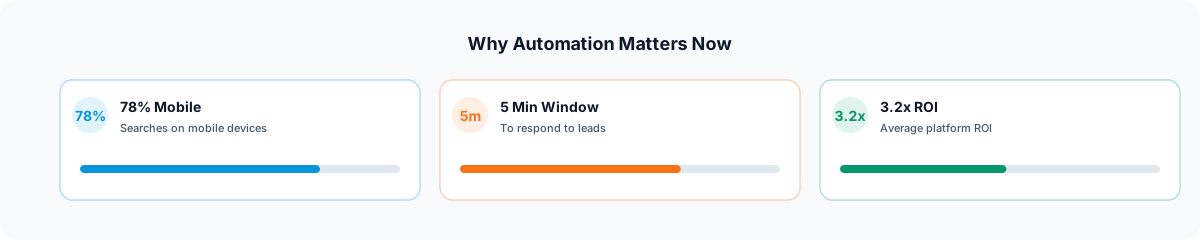
The competitive landscape for local businesses has changed dramatically. Ten years ago, showing up in the Yellow Pages and having a decent website was enough. Five years ago, maintaining a Google Business Profile and running some Facebook ads gave you an edge. Today, your competitors are using AI-powered tools to automate their entire marketing operation, and the gap between automated businesses and manual ones is widening every quarter.
Consider what your most aggressive competitor is doing right now. Every completed job triggers an automatic review request via SMS. Every new review gets a personalized AI response within minutes. Their Google Business Profile publishes fresh posts three times per week without anyone touching it. Email sequences nurture every lead that does not convert immediately. Reactivation campaigns reach out to past customers before they forget who served them.
None of this requires a large team. It requires a system. And the business running this system is capturing the customers you are losing because your follow-up was a day late, your GBP has not been updated in two weeks, and your last review request went out three months ago.
What to Automate: The 6 Highest-Impact Channels

Not everything should be automated, and not everything needs to be automated at once. Start with the channels that have the highest impact relative to the effort they require when done manually.
1. Review Generation and Response
This is the single highest-ROI automation for most local businesses. AI review management sends SMS review requests after every completed job, follows up with non-responders, and drafts personalized responses to every review. Businesses that automate reviews consistently generate 3 to 5x more reviews than those asking manually.
2. Google Business Profile Management
Your GBP is the first thing most potential customers see. Google Business Profile automates weekly posts, photo uploads, Q&A responses, and profile updates. Businesses that post to their GBP at least twice per week see 70% more profile views and 50% more direction requests than those posting monthly or not at all.
3. SMS Follow-Up and Nurturing
When a lead calls but does not book, or requests a quote but goes silent, automated SMS sequences keep the conversation alive. A three-message sequence over five days converts 15 to 20% of leads that would otherwise be lost. SMS has a 95% open rate, making it the most reliable channel for reaching local customers.
4. Email Drip Campaigns
Email is not dead for local businesses. It is underutilized. Welcome sequences for new customers, seasonal maintenance reminders, and reactivation campaigns for dormant customers all drive repeat business. The key is that these need to be set up once and run automatically. Nobody has time to compose individual emails to 500 past customers.
5. Appointment Scheduling and Reminders
Missed appointments and no-shows cost local businesses thousands per month. Automated booking links, confirmation texts, and reminder sequences reduce no-shows by 30 to 50%. When a customer can book online at 10 PM and receive an automatic confirmation, you capture business that would otherwise go to the competitor who answers the phone faster.
6. Local Rank Tracking
You cannot improve what you do not measure. Automated rank tracking monitors your positions for target keywords across your service area. Instead of manually searching Google to see where you rank, the system tracks 50+ keywords weekly and alerts you to significant changes so you can react before a ranking drop turns into a revenue drop.
The ROI of Marketing Automation for Local Businesses

The ROI question is the most important one, and the numbers are compelling. Here is what typical local businesses see after implementing marketing automation across the channels above.
3-5x
More reviews per month compared to manual asking
15-20%
Recovery rate on leads that would otherwise be lost
10-15 hrs
Saved per week on repetitive marketing tasks
For a home services business generating $50,000 per month in revenue, automation typically adds $8,000 to $15,000 in monthly revenue through better lead follow-up, more reviews driving new customers, and reactivation of past customers. Against a software cost of $100 to $500 per month, the return is 15:1 to 30:1 in most cases.
The time savings alone justify the investment for most business owners. Ten to fifteen hours per week freed from manual marketing tasks means more time on the truck, in the office, or with family. Automation does not replace your marketing. It makes your marketing consistent, which is the only thing that actually matters in the long run.
Manual Marketing vs. Automated: A Side-by-Side Comparison
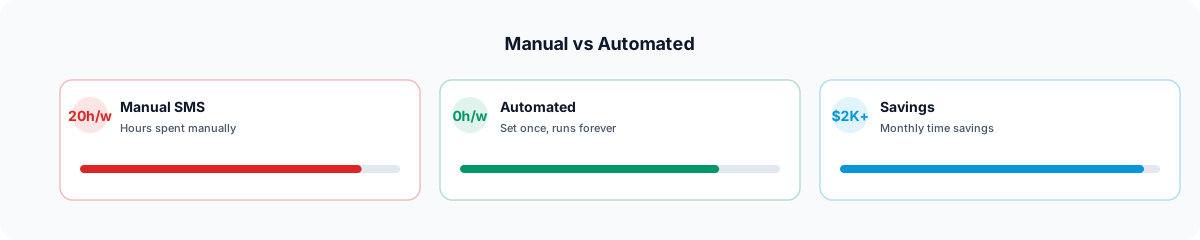
| Task | Manual | Automated |
|---|---|---|
| Review requests | Ask verbally, 5-10% compliance | SMS blast, 25-35% compliance |
| Review responses | Copy-paste or skip entirely | Unique AI response within minutes |
| GBP posts | Monthly at best, often forgotten | 3x per week, auto-scheduled |
| Lead follow-up | Next day if remembered | Within 60 seconds, every time |
| Email nurturing | One-off blasts, no segmentation | Triggered sequences by customer stage |
| Rank tracking | Occasional manual Google search | Weekly reports across 50+ keywords |
The pattern is the same across every channel. Manual marketing depends on human memory, motivation, and available time. Automated marketing runs on a schedule regardless of how busy your week is. Consistency is the unfair advantage, and automation is the only way to guarantee it.
Common Objections (and Why They Are Wrong)
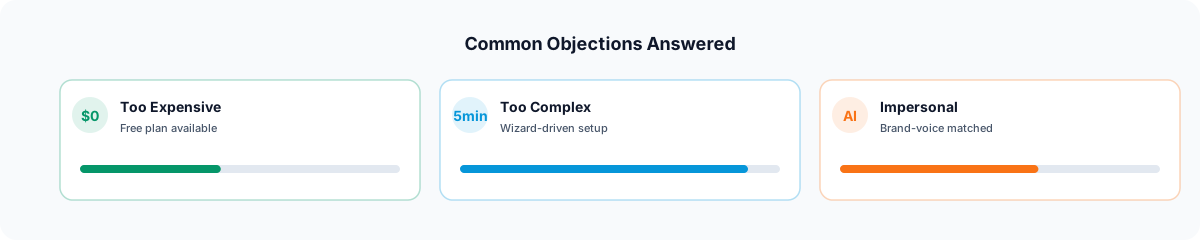
"My customers want a personal touch, not automation."
This is the most common objection and the most misguided. Automation does not remove the personal touch. It ensures the personal touch happens every time. When an AI sends a review request that says "Hi Sarah, thanks for choosing us for your kitchen remodel last Tuesday," that is more personal than forgetting to ask altogether. Your customers do not care whether a human or a system sent the text. They care that you thought of them.
"I do not have time to set it up."
Setup for a modern platform takes 30 to 60 minutes. You connect your Google profile, import your customer list, and configure your preferences. From that point forward, you save 10+ hours per week. The math is straightforward: one hour of setup saves you 500+ hours per year.
"It is too expensive for a small business."
Marketing automation platforms designed for local businesses start at $147 per month. If that investment recovers even one additional customer per month, it pays for itself many times over. Most businesses see a positive return within the first two weeks of sending their initial review blast and lead follow-up sequences.
The AI Layer: Why 2026 Automation Is Different
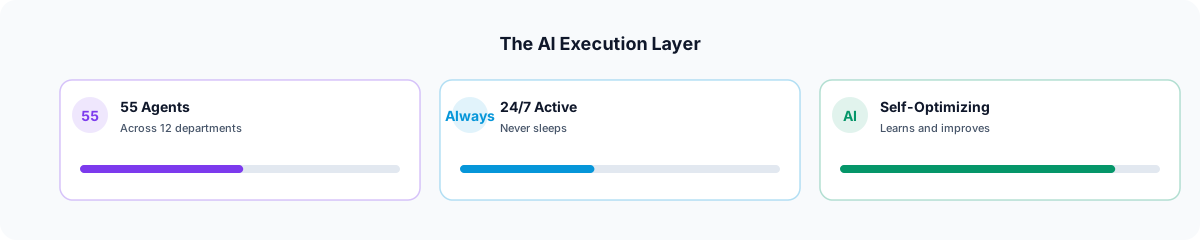
Marketing automation has existed for over a decade, but what makes 2026 different is the AI layer on top. Traditional automation followed rigid if-then rules: if a customer books, send email A. If they do not respond, send email B. The system was only as smart as the rules you programmed.
AI-powered automation adapts. Instead of sending the same template to every customer, AI generates unique content based on the specific service, the customer's history, and the context of the interaction. AI Receptionist agents answer inbound calls with natural conversation and book appointments without human intervention. Content Studio creates blog posts, social media content, and ad copy tailored to your brand voice and local market.
The AI does not just execute tasks. It learns which messages get the best response rates, which send times drive the most engagement, and which content types generate the most leads for your specific business. Over time, the system optimizes itself in ways that static automation never could.
How to Get Started Without Overwhelming Your Team
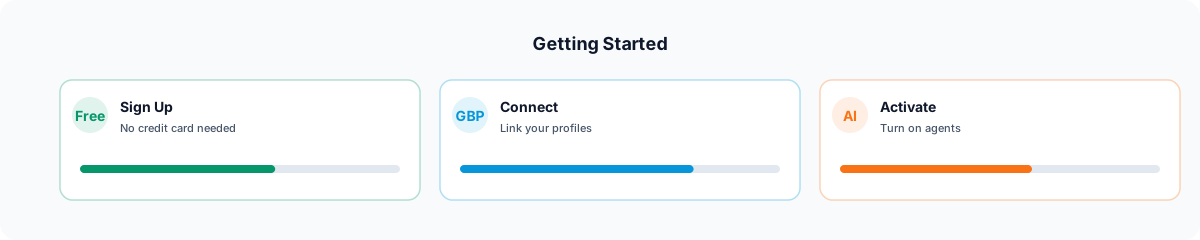
The biggest mistake businesses make with automation is trying to do everything at once. Start with the one or two channels that will have the most immediate impact, then expand from there.
Week 1: Reviews and Lead Follow-Up
Connect your Google Business Profile and import your customer list. Send your first review blast to the last 30 days of customers. Set up automatic review requests for all future completed jobs. Configure lead follow-up sequences so no new inquiry goes unanswered for more than 60 seconds.
Week 2: GBP and Content
Turn on Google Business Profile to start publishing weekly posts. Set up your content calendar for social media. These channels build your visibility over time, so starting early compounds the benefit.
Week 3 and Beyond: Email, Rank Tracking, and Optimization
Build your email drip campaigns for welcome sequences, seasonal reminders, and reactivation. Enable rank tracking for your target keywords. At this point, your marketing engine is running and your role shifts from doing the work to reviewing the results.
The Bottom Line: Automate or Fall Behind
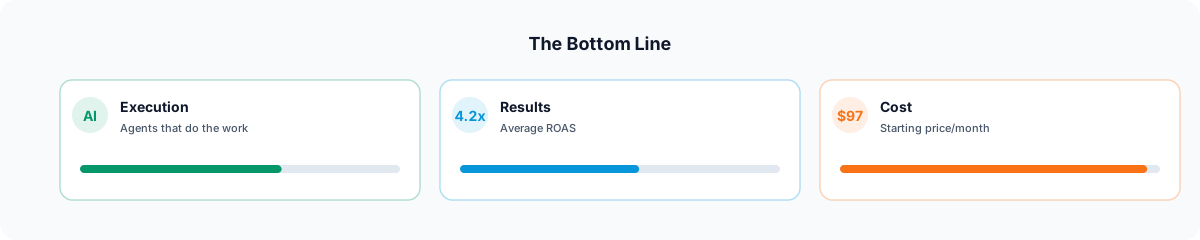
Marketing automation for local businesses is no longer a competitive advantage. It is a baseline requirement. The businesses in your market that are growing fastest are not working harder on marketing. They are working smarter with systems that run whether they are on the job, on vacation, or asleep.
Every day without automation is a day of lost reviews, missed follow-ups, stale GBP profiles, and leads that went to a competitor because your response came 24 hours too late. The tools exist. The cost is minimal relative to the return. The only question is how long you wait before your competitors make the decision irreversible.
Start with reviews and lead follow-up. See the results in the first week. Then expand from there. Within a month, you will have a marketing engine that generates leads, nurtures customers, and builds your reputation on autopilot. That is the power of a connected marketing platform built for local businesses.