AI SEO agents are one of the fastest-growing categories in marketing technology. Tools like MEGA, Merchynt Paige, and Surfer SEO promise to automate everything from keyword research to content publishing, often with little to no human involvement. For business owners drowning in marketing complexity, that sounds like a dream.
But here is the reality: most AI SEO agents solve only one piece of a much larger puzzle. If you are a local service business (think HVAC, plumbing, roofing, electrical, or landscaping), ranking on page one of Google is just the starting line. You also need to manage your Google Business Profile, earn reviews, run ads for immediate leads, follow up with prospects in under five minutes, and actually answer the phone when it rings.
This post breaks down what AI SEO agents actually do, who the major players are, what they get right, what they miss, and when you might need a more complete solution.
What AI SEO Agents Actually Do
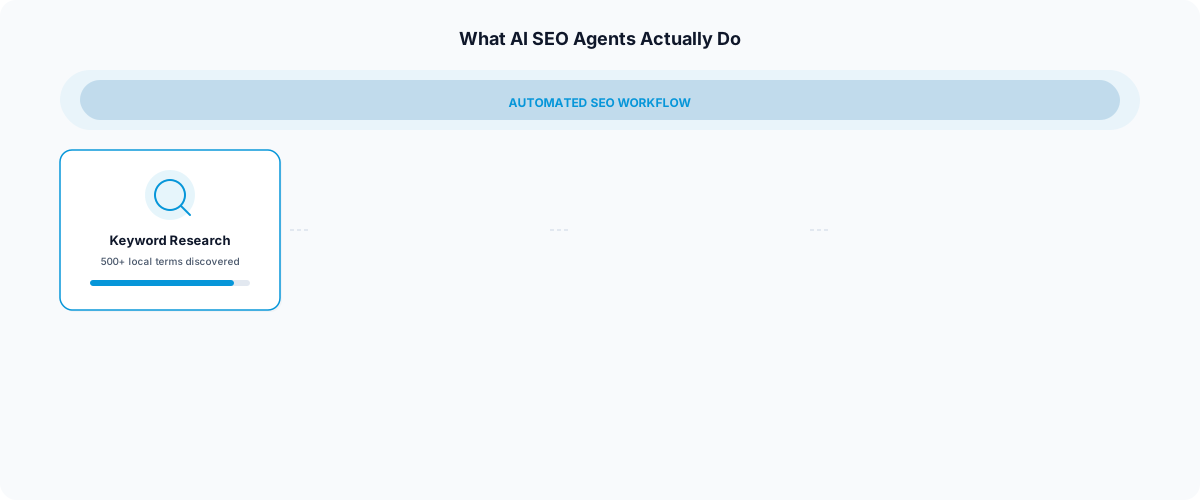
At their core, AI SEO agents use machine learning models and large language models (LLMs) to automate tasks that traditionally required an SEO specialist or agency. The specific capabilities vary by tool, but most cover some combination of the following:
- Keyword research using ML models to identify search terms with high volume, low difficulty, and strong commercial intent for your industry and location.
- Automated content generation that produces blog posts, landing pages, and service pages optimized around target keywords.
- Technical SEO audits that scan your website for broken links, missing meta tags, slow page speeds, improper redirects, and crawl errors.
- Internal link building that connects related pages across your site to distribute authority and improve crawlability.
- Schema markup deployment that adds structured data to your pages so search engines better understand your content and display rich results.
- Rank tracking that monitors your keyword positions daily and alerts you to drops or opportunities.
Some tools go further, autonomously publishing content, submitting sitemaps, and even building backlinks. The most advanced agents operate with minimal human input, running 24/7 on autopilot.
The Major Players
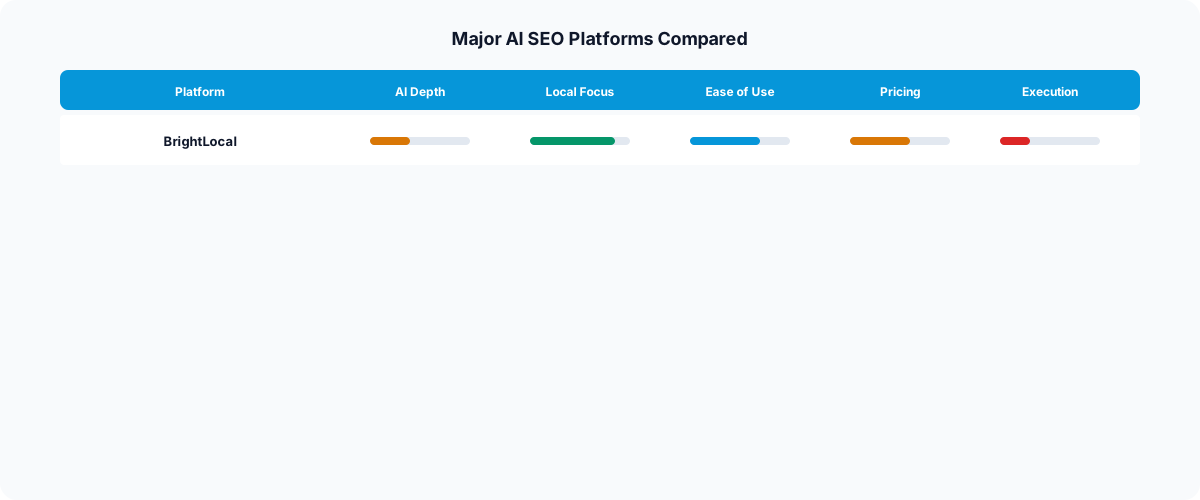
The AI SEO agent market has exploded in 2025 and 2026. Here are the tools most commonly considered by local businesses:
MEGA ($699/mo)
MEGA is the most ambitious AI SEO agent on the market. Their autonomous agent "Lindsay" handles keyword research, content creation, technical audits, and on-page optimization through a WordPress plugin. MEGA claims 85% autopilot operation, meaning the AI handles most decisions without human approval. It is designed for businesses that want to set and forget their SEO.
Merchynt Paige ($99/mo)
Merchynt takes a different approach by focusing specifically on Google Business Profile (GBP) optimization. Paige auto-publishes GBP posts, responds to customer reviews, and keeps your profile updated with fresh content. At $99/mo, it is the most affordable option, but it is narrowly focused on GBP rather than broader SEO.
Semrush GBP AI Agent
Semrush, already a dominant name in SEO tools, has added an AI-powered GBP management agent as an add-on to their existing platform. It helps businesses manage their Google Business Profile listings, publish updates, and monitor local rankings. It works best as a complement to Semrush's broader SEO toolkit rather than a standalone solution.
Surfer SEO
Surfer SEO is primarily a content optimization tool. It analyzes top-ranking pages for your target keywords and gives you a content score based on word count, keyword density, headings, and related terms. It is excellent at telling you what to write, but it does not execute the work for you. Surfer is a recommendation engine, not an autonomous agent.
What AI SEO Agents Get Right
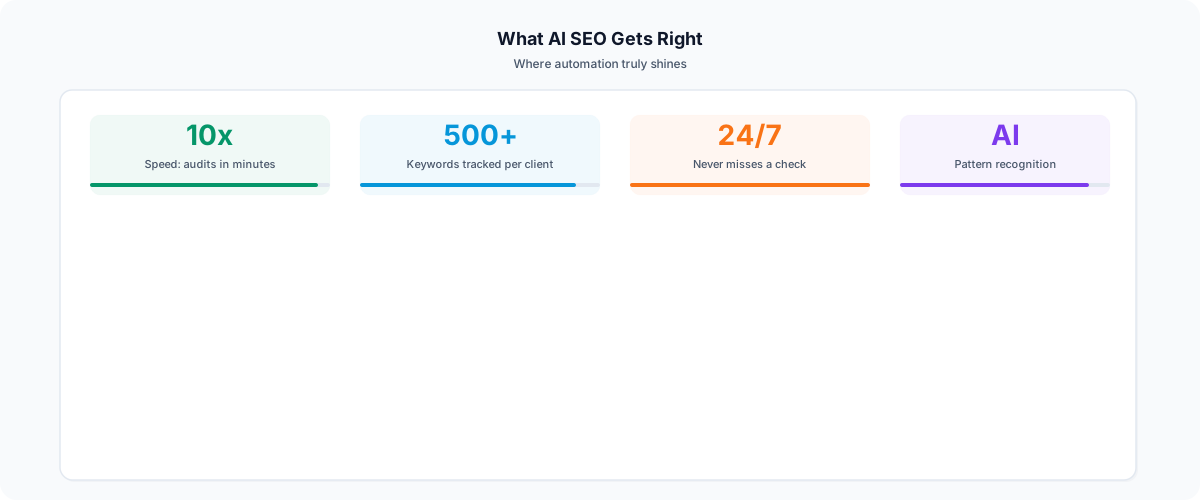
There is a reason these tools are gaining traction. They solve real problems that business owners face with traditional SEO services:
- Scale: An AI agent can optimize hundreds of pages simultaneously. A human SEO specialist might handle 10 to 20 pages per week. For large sites or multi-location businesses, this speed advantage is massive.
- Speed: AI agents work 24/7. There are no business hours, no PTO, no waiting for deliverables. Technical audits that take an agency a week can be completed in minutes.
- Cost: At $99 to $699 per month, AI SEO agents are a fraction of the cost of a traditional SEO agency, which typically charges $2,000 to $10,000 per month. For bootstrapped businesses, the economics are compelling.
- Consistency: AI never misses a scheduled post, forgets to run an audit, or lets a task slip through the cracks. It executes the same process perfectly every single time.
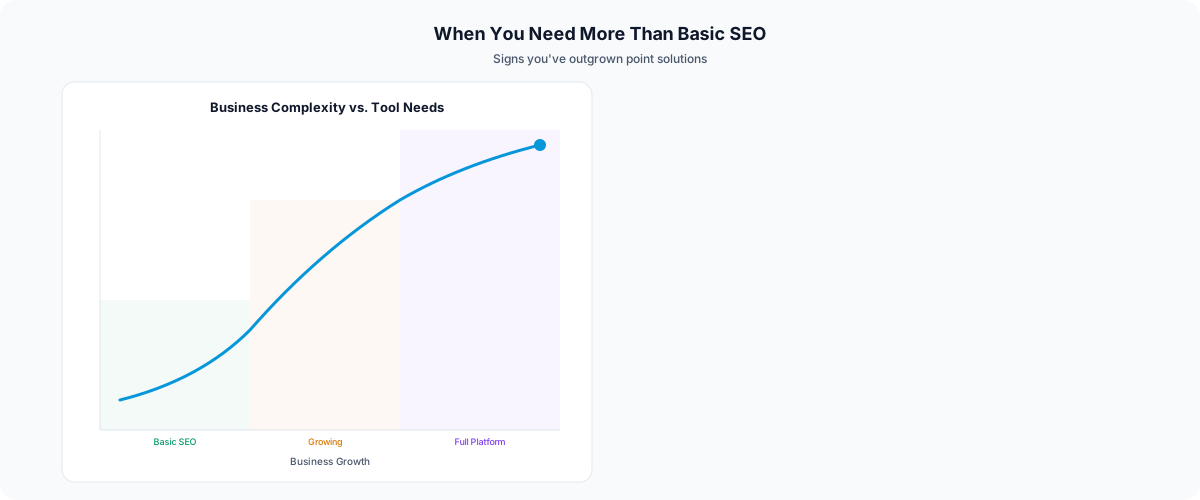
For businesses that just need raw SEO execution at scale, these tools deliver genuine value. The problem is that most local service businesses need far more than SEO execution.
What AI SEO Agents Miss
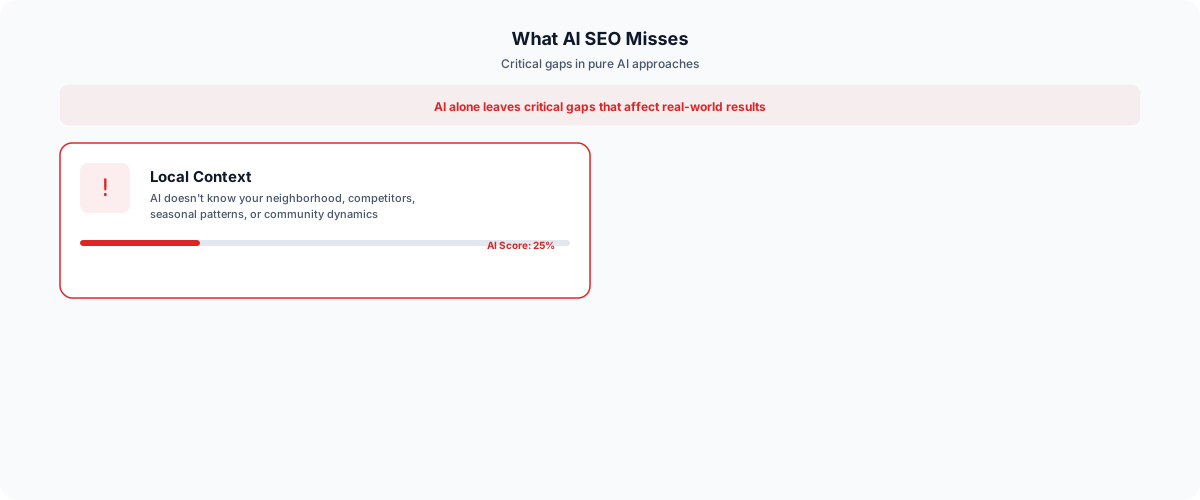
This is where the story gets more complicated. AI SEO agents are designed to rank your website higher in search results. But for local service businesses, ranking is only one part of a complex growth engine. Here are the critical gaps:
Google Business Profile Management
Most AI SEO tools focus exclusively on your website and ignore your Google Business Profile entirely. This is a massive blind spot. For local businesses, GBP drives 3 to 5 times more leads than organic website traffic. Google Business Profile tools that manage posts, photos, and Q&A are essential for any serious local SEO effort. When someone searches "AC repair near me" or "emergency plumber," they are looking at the map pack, not scrolling through blog posts. If your GBP is not optimized, updated regularly, and stocked with photos and posts, you are invisible where it matters most.
Review Strategy
AI can respond to reviews once they appear. But it cannot request reviews from real customers. Review velocity, the rate at which you earn new reviews consistently, is one of the strongest ranking signals for local search. Building that velocity requires human outreach: text messages after a job, follow-up emails, QR codes on invoices, and sometimes just asking face to face. No AI SEO agent handles this end-to-end.
Local Market Intelligence
AI models are trained on broad datasets, not your local market. They do not know that "AC repair" searches peak in May in Phoenix but not until July in Seattle. They do not understand that your top competitor just launched a price war on water heater installations, or that a new housing development three miles away is about to create a surge in HVAC demand. Local market intelligence requires human understanding of your specific geography, seasonality, and competitive landscape.
Paid Advertising
SEO is a long game. Even with the best AI agent, meaningful organic rankings take 3 to 9 months to materialize. Local businesses cannot wait that long for leads. They need Google Ads and Meta Ads running from day one, generating calls and form fills while SEO builds momentum in the background. AI SEO agents do not manage paid campaigns. That means you are either waiting months for results or paying for a separate ads tool or agency on top of your SEO agent.
Lead Follow-Up
Driving organic traffic to your website is meaningless if you do not respond to leads quickly. Data consistently shows that responding within 5 minutes increases conversion rates by 400% compared to responding within 30 minutes. AI SEO tools do not include CRM functionality, automated text follow-ups, or speed-to-lead workflows. Your SEO agent might get someone to your contact form, but if nobody responds for three hours, that lead is calling your competitor.
AI Receptionist and Call Handling
For home service businesses, 62% of leads come via phone calls, not web forms. When a homeowner has a burst pipe or a broken furnace, they call. If your phone goes to voicemail during lunch, after hours, or on weekends, you lose that job. AI SEO agents have no concept of call handling. They optimize for clicks and impressions, not for answered phones. AI Receptionist and intelligent call routing are becoming essential for service businesses, but they exist in an entirely separate category from SEO tools.
Content Quality
AI-generated content has improved dramatically, but it still tends to be generic. It lacks local references ("we recently completed a full HVAC replacement in the Summerlin area"), real project photos, genuine customer testimonials, and the kind of authentic detail that builds trust. Google's helpful content update specifically targets thin, templated AI content that does not add unique value. A 2,000-word blog post that reads like every other AI-generated article on the topic will not outrank a well-written piece with original insights and real expertise.